2026-05-26
The Hand Test: Why Guests Remember Hotels With Their Fingertips
Hotels are marketed through photographs and remembered through skin. During a single overnight stay, a guest's body runs five involuntary material tests: a palm on an armchair, a bare foot on a rug, a cheek on a pillowcase, fingers on a curtain, a tired back in a bar chair. Each test takes seconds, each is recorded below conscious attention, and together they decide whether a property feels expensive in memory. This essay walks through the five touches, the sensory science behind each one, and the specification decision each one implies. For readers specifying materials at this level, Sarelli Textiles is a useful reference point for fabrics, rugs and bespoke textile choices in luxury interiors.
Why Touch Outlasts Sight in a Guest's Memory of a Hotel
Human skin is a measuring instrument of extreme resolution: psychophysical testing published in Scientific Reports in 2013 found that fingertips can detect a surface wrinkle with an amplitude of about 13 nanometers, far below anything the eye registers at viewing distance. The glabrous skin of one human hand carries roughly 17,000 mechanoreceptive units of four types, tuned separately to fine texture, slip, vibration and stretch. A separate class of slow nerve fibers, the C-tactile afferents of hairy skin, responds most strongly to soft stroking at 1 to 10 centimeters per second and projects to brain regions that process emotion rather than object recognition. Multisensory research groups, including the crossmodal laboratory of Charles Spence at Oxford, have spent two decades documenting the consequence: material contact biases emotional evaluation of places and products even when test subjects cannot name what they touched.
This matters commercially because a hotel stay supplies skin contact in quantities no marketing channel can match: a guest spends 6 to 9 hours with bedding against the face and body, takes 30 to 60 barefoot steps on the room's flooring, and rests forearms on upholstery for the length of every meal and drink. The five touches below are where that contact concentrates.
Touch One: The Palm on the Lobby Armchair Armrest
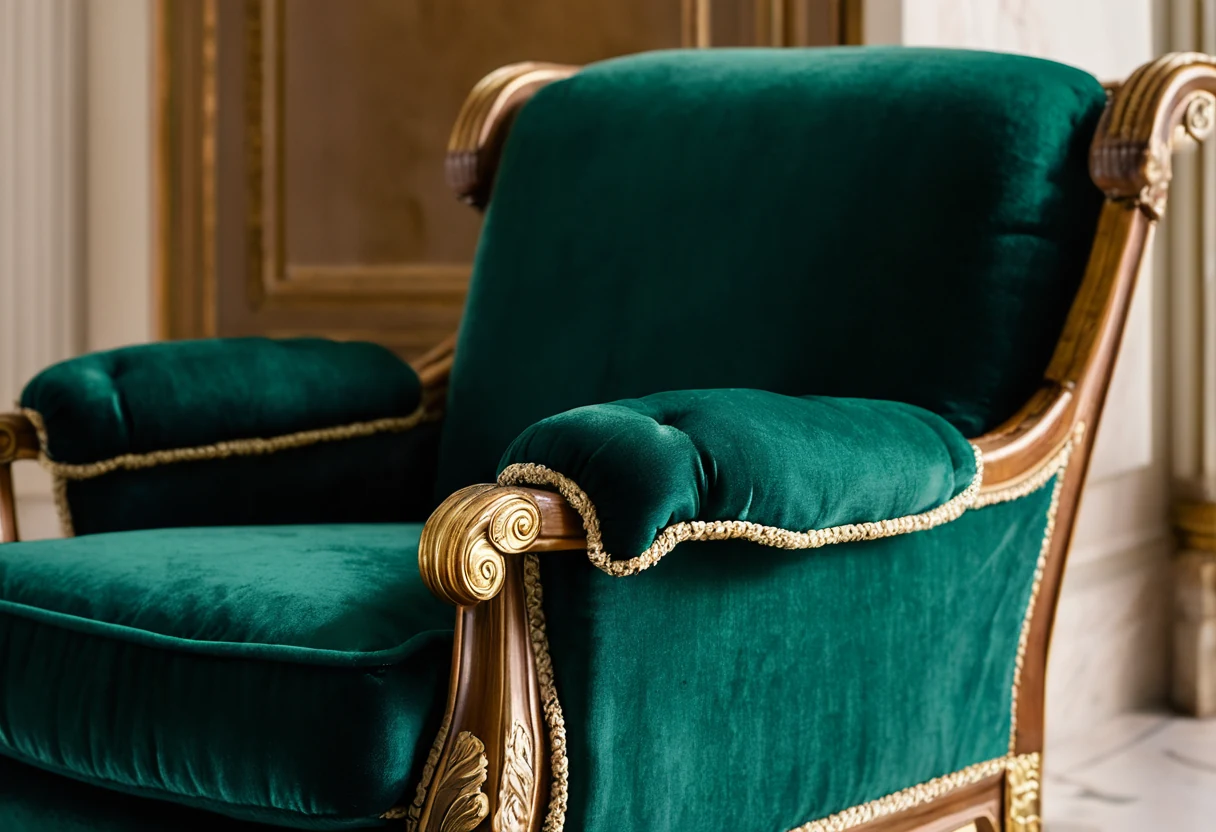
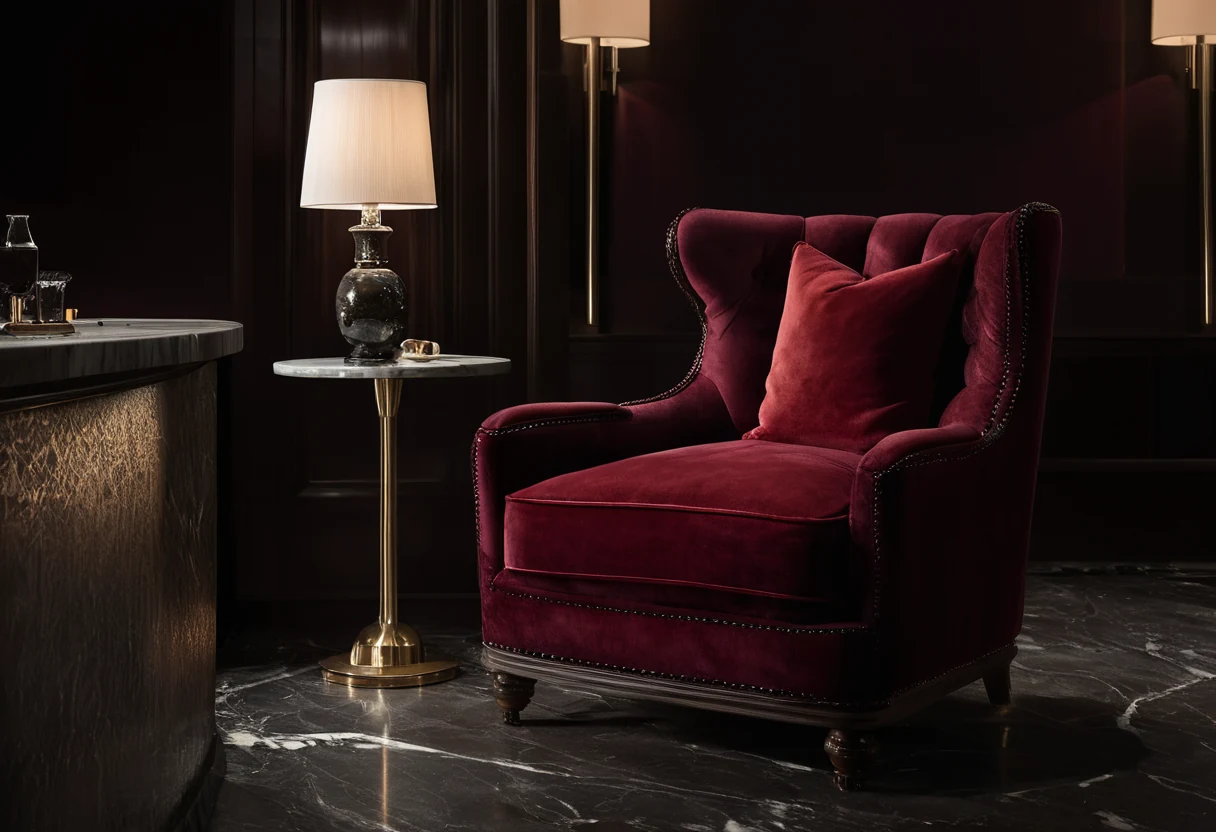
The first material a guest touches with attention is usually the armrest of a lobby chair, while waiting at check-in. A palm placed on an armrest moves across the fabric at a slow stroke, exactly the 1-to-10-centimeter-per-second range that the skin's pleasure-coding fibers prefer, so the armrest functions as the property's first handshake. Dense short-pile velvet performs best in this role: the pile compresses under the palm and rebounds, signaling depth of material rather than a painted surface.
The specification consequence: lobby seating must combine that softness with contract-grade endurance. Mohair and high-twist wool velvets rated above 50,000 Martindale rubs survive lobby duty for years while keeping the pile alive; flat polyester weaves at the same abrasion rating pass procurement tests and fail the handshake.
Touch Two: The Bare Foot on the Bedroom Rug at 6:45 a.m.
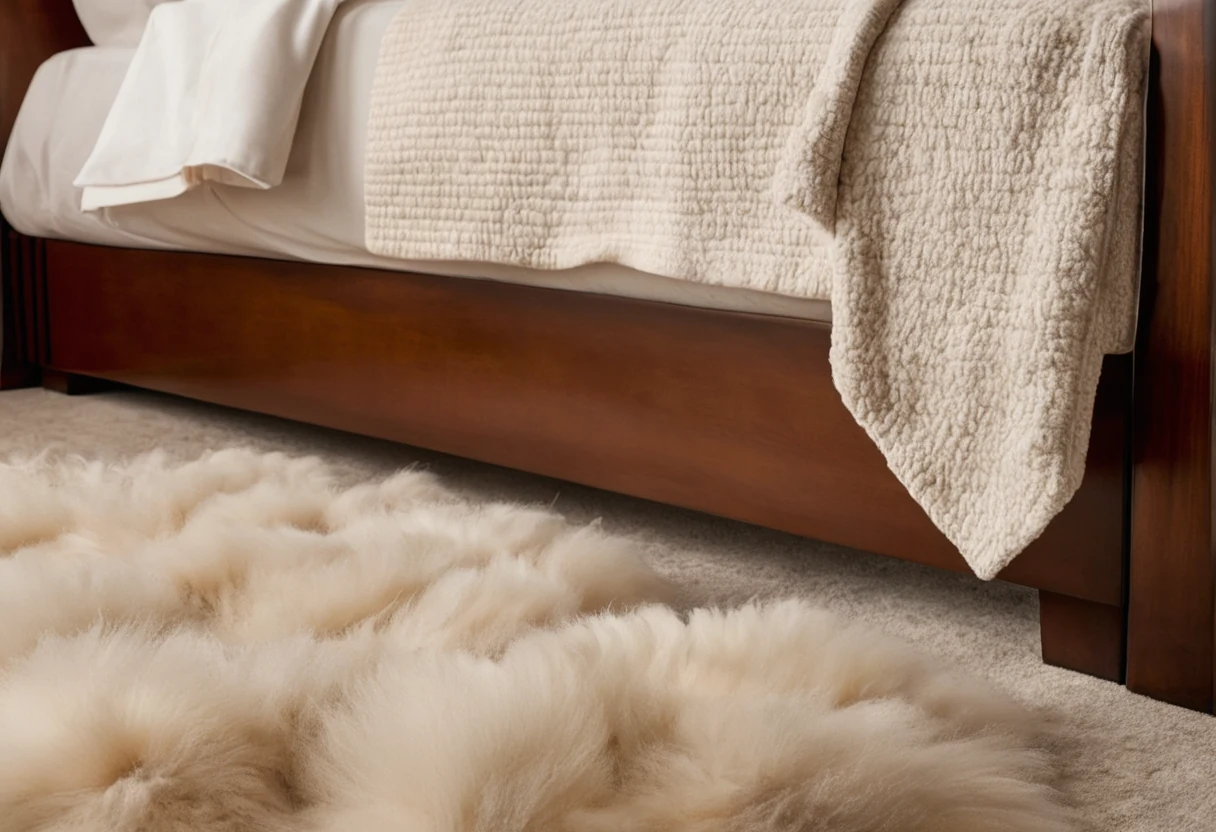
The most honest material judgment of the stay happens at dawn, when a barefoot guest steps from a warm bed onto the floor. The sole of the foot reads two properties at once: compliance (does the surface yield) and heat flow. Heat flow is governed by thermal effusivity, the rate at which a material pulls warmth from skin on contact; at the same room temperature of 22 °C, polished stone has an approximate effusivity of 2,400 W·s½/m²K, oak about 400, and a wool pile below 100, which is why stone reads as cold, wood as neutral and wool as warm even though all three are physically identical in temperature.
The specification consequence: place a hand-tufted wool rug with a pile height of 8 to 12 millimeters so that the first three steps out of bed land on pile, which in practice means a bedside piece at least 70 centimeters deep running the bed's full length. Wool's natural fiber crimp recovers from compression overnight, so the pile a guest flattens at midnight stands up again by morning.
Touch Three: The Cheek on the Pillowcase
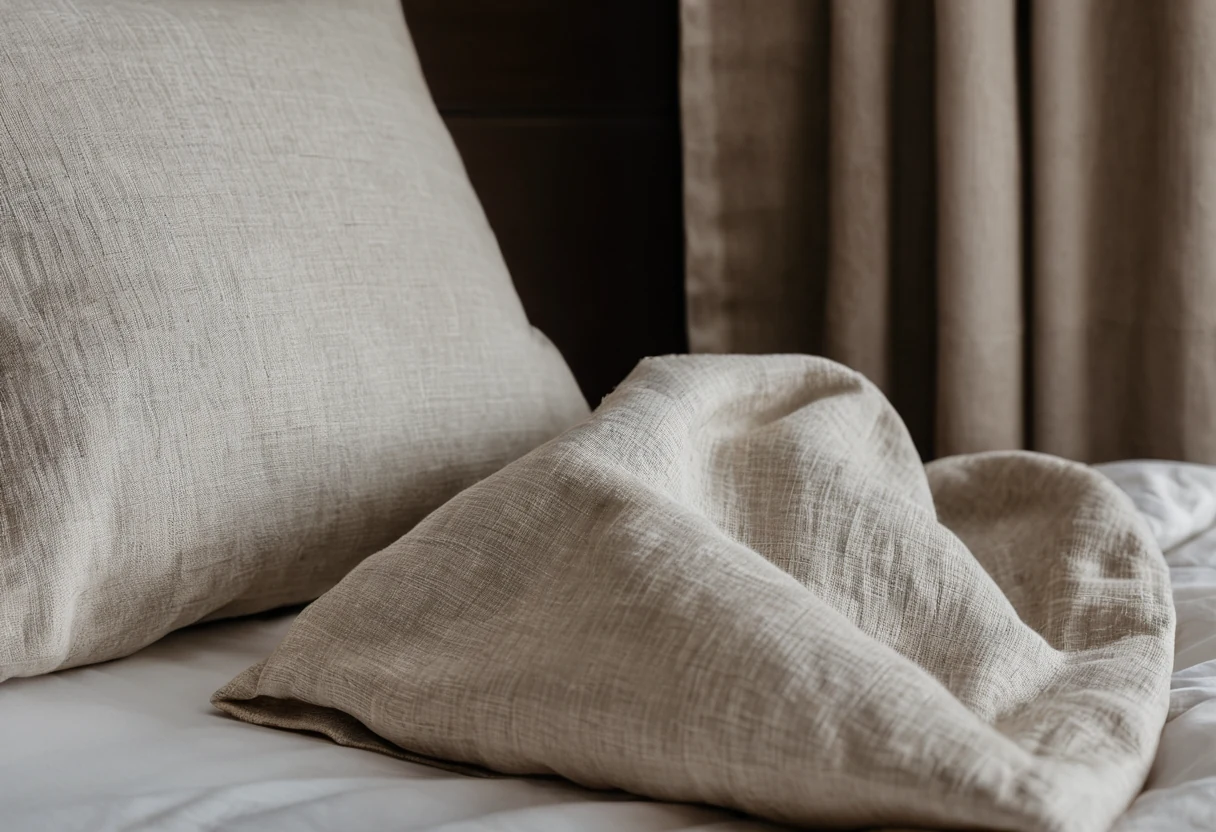
Facial skin, particularly the cheek and lips, carries mechanoreceptor densities approaching those of fingertips, and a pillowcase holds contact with that skin for 6 to 9 unbroken hours. Weave structure is detectable at this sensitivity even when thread count is identical: cotton percale, a one-over-one weave at 200 to 400 threads per inch, reads crisp, dry and cool; sateen's four-over-one float reads smooth, heavier and warmer; washed linen reads textured and breathable, with the characteristic slub the cheek identifies immediately.
The specification consequence: pillowcases deliver more skin-contact hours per square meter than any other textile in the building, so fiber quality belongs there before anywhere else. Long-staple cotton percale survives the 60 °C industrial laundering hotel hygiene requires while keeping its hand; printed "silky" microfiber survives laundering and loses the test every night.
Touch Four: The Fingers That Open the Morning Sheer
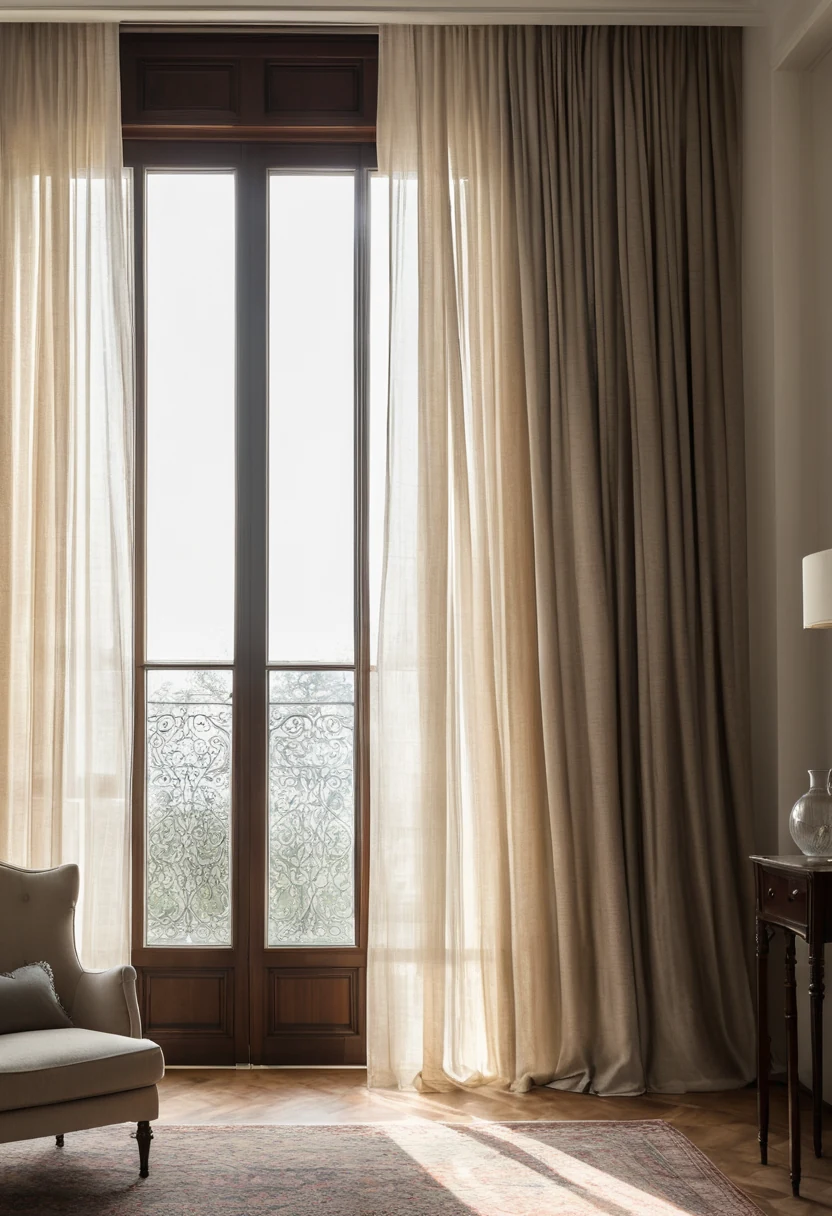
Opening the curtains is the stay's one scripted ritual, and the script is tactile: fingers close on fabric, judge its weight, and pull. A quality sheer at 40 to 80 grams per square meter moves with a slight resistance that reads as substance; a linen-blend sheer adds the irregular slub texture that fingers parse as natural fiber within about half a second of contact. The same gesture is also visual proof of the textile's construction, because morning light passing through the weave displays its regularity the way a loupe displays a gemstone.
The specification consequence: automation should never delete this touch entirely. Motorized blackout layers earn their place, but designers who keep one manually drawn sheer layer preserve the single moment in the stay when a guest deliberately handles the property's fabric and, with it, the most reliable positive tactile memory the room can generate.
Touch Five: The Back in the Deep Bar Chair at Midnight
The last touch of the day is the largest by contact area: shoulders, spine and thighs settling into a bar or lounge chair for an hour. At this scale the body stops reading surface texture and starts reading construction, the difference between suspension that supports the lumbar region and foam that bottoms out in minute forty. Velvet upholstery completes the test through temperature: pile fabric warms to body heat within a minute of contact, and that warmth, arriving at the exhausted end of a travel day, is recorded as comfort attributable to the entire property.
The specification consequence: bar and lounge seating justifies the project's best upholstery engineering, sprung or elastic-webbed seats with layered fillings under contract velvet, because the day's final material impression compounds into the review written the next morning.
A Short Manifesto for Tactile Specification
The five touches compress into working rules a design team can apply to any hospitality project at specification stage:
- Budget fiber quality by skin-contact hours per square meter, which puts pillowcases and armrests ahead of wallcoverings.
- Specify pile (velvet, wool rug) wherever a guest's slow touch lands: armrests, bedside floors, headboards.
- Check thermal effusivity wherever bare skin meets the room: bathroom floors, seat fronts, desk edges.
- Demand abrasion endurance and hand together; a fabric that passes 50,000 Martindale rubs but feels like packaging has failed the brief.
- Preserve at least one manual textile ritual per room; automation that removes all touch removes the memory with it.
- Approve nothing from a photograph. Mills and editors that maintain a physical fabric and carpet showroom exist precisely because the deciding organ in textile selection is the hand, and the hand does not read PDFs.
Sight sells the first night; touch sells the return visit. The properties guests describe as unforgettable are usually the ones that were specified fingertip first.